
by Coach Carlo | Jul 27, 2026 | Sports Parenting
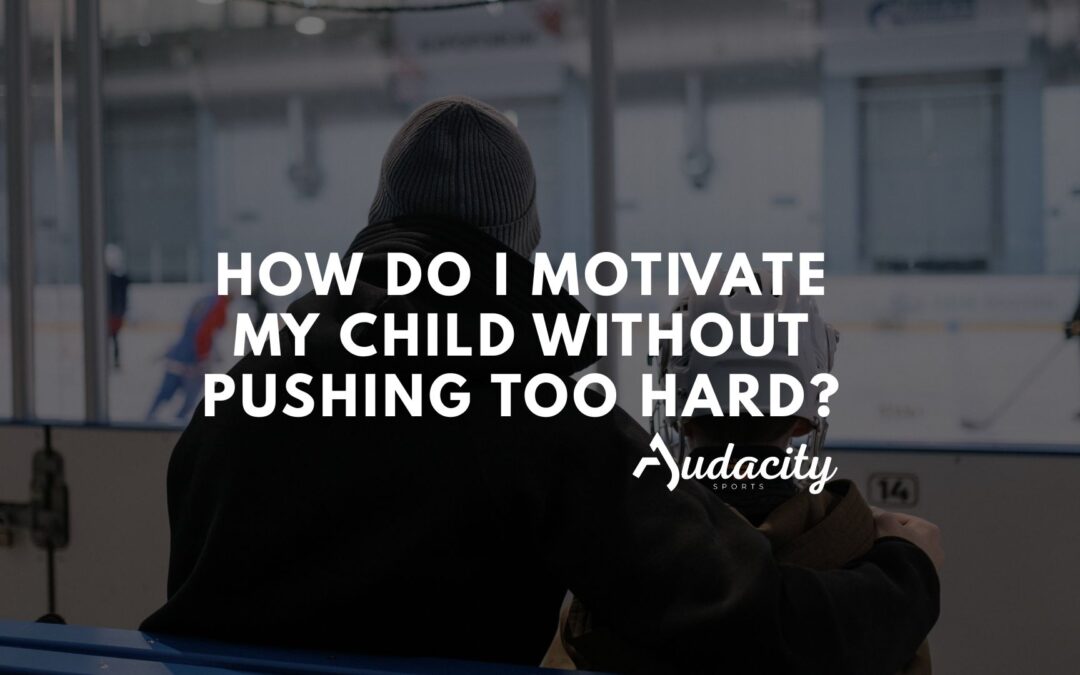
Quick Summary: Most sports parents would never intend to pressure their child — yet tone, body language, and the car-ride questions can send a louder message than we realize. Kids read our nervous system before they hear our words. The good news: a few small shifts on the sideline and after games can turn you from a source of pressure into your child’s steadiest advantage.
Your child is watching the sideline as closely as the scoreboard. You are the mirror they check.
Can a parent accidentally add pressure?
Easily — and usually without a word. Kids are expert readers of the adults who love them. A tight jaw after an error, a groan from the stands, or a rushed “what happened out there?” all register as data: this matters to Mom or Dad, and I might be disappointing them. That low hum of evaluation is exactly what turns a game a child once loved into a test they are afraid to fail.
What are the signs I might be adding pressure?
None of these make you a bad parent — they are common, and fixable once you see them.
The Sideline Check
Three quiet pressure signals
Coaching from the stands
Instructions mid-play split their focus and signal your worry.
Result-first questions
“Did you win?” before “Did you have fun?” tells them the score is what counts.
Visible reactions to errors
A wince or head-shake gets seen — and remembered — mid-game.
“Kids read your nervous system before they hear your words.”
How do I become a calming presence instead?
Pick one job on the sideline: be the calm. Cheer effort, not just outcomes. Save all instruction for the coach. And lead your post-game conversation with connection — “I love watching you play” — before anything about performance. When your child glances over after a mistake, let the mirror they see reflect steadiness, not stress.
Frequently asked questions
Is it wrong to want my child to succeed?
Not at all. The aim is not to care less — it is to keep your care from reading as pressure. Channel it into support for their effort rather than reactions to their results.
My child says I stress them out at games. What now?
Take it as useful feedback, not an attack. Ask what specifically would help — often it is simply “stop yelling tips” or “don’t look upset.” Then honor it.
Should I stop coming to games?
Rarely the answer. Your presence matters; it is the type of presence that counts. A calm, supportive parent in the stands is a gift.
Be the calm they check for. That’s the whole job.
Audacity Sports — Mental Performance Academy for Youth Athletes
by Coach Carlo | Jul 24, 2026 | Sports Parenting
Quick Summary: Every sports parent walks the same tightrope: push too hard and you drain the joy, back off entirely and you seem not to care. The research is clear that lasting motivation comes from inside a child, not from pressure applied outside. The parent’s real job is to protect the conditions that let a kid’s own drive grow — autonomy, progress, and a love of the game.
Motivation you install from the outside runs out. Motivation a child owns keeps refueling itself.
Why doesn’t pushing harder work?
Pressure can spark short-term effort, but it comes at a cost: the child starts playing to avoid your disappointment rather than to chase their own goals. That is fragile fuel. The moment the pressure eases — or the stakes rise — it collapses. Worse, it slowly links the sport to stress, which is the road to quitting. Externally driven kids burn out; internally driven kids keep going.
Where does real motivation come from?
Decades of motivation research point to three ingredients. Protect these, and a child’s drive tends to take care of itself.
What Fuels Real Drive
Three ingredients to protect
Ownership
Let it be their sport, their goals. Kids protect what they choose.
Progress
Visible improvement is addictive. Help them see how far they’ve come.
Joy
Fun is not the opposite of serious. It’s the fuel that keeps them coming back.
“Kids protect what they choose. Ownership is the whole game.”
So what should a parent actually do?
Provide the opportunity and the support, then hand the wheel over. Ask “what do you want to get better at?” instead of assigning goals. Praise effort and progress over outcomes. Let natural consequences teach — if they skip practice, let the coach handle it. And keep your own emotions off their results. Encouragement fuels; pressure drains. Your steadiness is the environment their motivation grows in.
Frequently asked questions
What if my child seems lazy or unmotivated?
Look underneath it. “Lazy” is often fear of failing, fatigue, or a goal that is theirs in name only. Address the real cause rather than turning up the pressure.
Is it ever okay to push?
A gentle nudge past a hard moment is fine — “let’s finish what we started this season.” Sustained pressure to perform is what backfires. Nudge effort, not outcomes.
My child wants to quit. Should I let them?
Have them honor the current commitment, then choose freely afterward. Forcing a sport long-term rarely rebuilds love for it — and the choice itself deepens ownership.
Protect the drive they own. Don’t replace it with pressure.
Audacity Sports — Mental Performance Academy for Youth Athletes
by Coach Carlo | Jul 14, 2026 | Mental Performance Tips, Sports Parenting
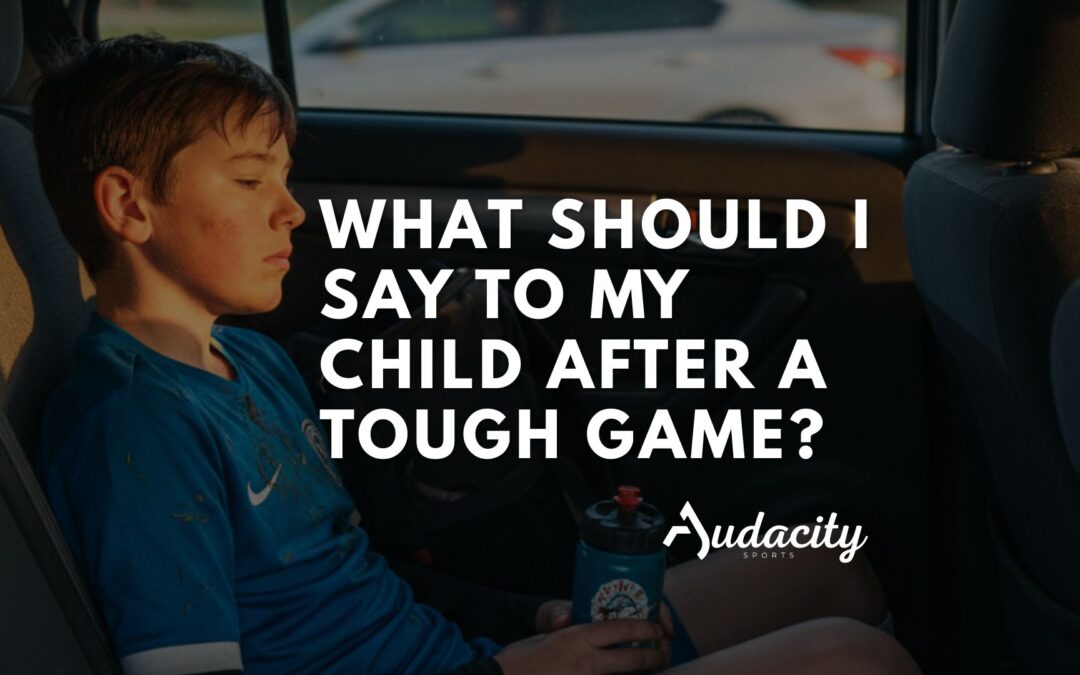
Quick Summary: The car ride home after a tough game is one of the most important — and most mishandled — moments in youth sports. Kids are raw, and what a parent says in the first few minutes can either rebuild them or deepen the sting. The short version: lead with connection, not analysis. Ask before you tell. And save the coaching for later, if at all.
Your kid isn’t looking for a post-game analyst on the ride home. They’re looking for a parent.
What should I say to my child after a tough game?
Start with five simple words: “I love watching you play.” Sports psychologists have pointed to this phrase for years because it does something powerful — it separates your love and approval from the result. After a loss, a kid is already wondering if they let you down. Leading with connection answers that fear before it grows.
Then go quiet. Let them set the tone. Some kids want to talk; many just want to feel normal again. Both are fine.
What should I avoid saying?
Avoid the instant breakdown of what went wrong, even when you mean well. In the raw minutes after a loss, “you should have…” lands as “you failed.” Also skip blaming refs, coaches, or teammates — it teaches kids to look outside themselves instead of focusing on what they control.
“In the raw minutes after a loss, ‘you should have’ lands as ‘you failed.’”
What is the best first question to ask?
Ask about experience before performance. A simple, low-pressure opener invites them in without putting them on trial.
The Ride-Home Reset
Three moves, in order
1. Connect
“I love watching you play.” Approval first, before anything about the game.
2. Ask
“What was that like for you?” Let them lead. Listen more than you talk.
3. Wait
Save any teaching for the next day, once the emotion has cooled — if it’s needed at all.
Why does the car ride home matter so much?
Because it repeats. Multiply one ride home by a whole season and you are training your child’s relationship with failure itself. Handled well, tough games become reps in resilience. Handled poorly, they become reasons to dread playing — and eventually, reasons to quit.
Frequently asked questions
What if my child wants to vent or cry?
Let them. Validate the feeling without rushing to fix it: “That one hurt — I get it.” Emotions move through faster when they are allowed, not argued with.
When is it okay to give feedback?
Later, and only if they are open to it. The next day, you can ask, “Want to talk about that play?” If they say no, respect it. Their coach handles coaching; you handle support.
My child shuts down completely. Is that bad?
No. Silence is a normal way to process. Stay present, keep it light, and let them know you are there when they are ready.
Win the ride home, and you win the season.
Audacity Sports — Mental Performance Academy for Youth Athletes